The scope and scale of cybersecurity has changed over the last few years, and much of that has to do with the explosive advance of Artificial Intelligence. Cyber threats are constant now – they’re automated and highly subtle, just waiting for an opportunity to breach your defences.
AI has transformed how hackers operate. But it’s also revolutionised how we respond in bolstering our cyber defences. In a case of fighting fire with fire, AI will form the backbone of cybersecurity defences in the years to come.
Today we’re going to take a closer look at it’s use cases in helping keep businesses and individuals safe, and how it benefits cybersecurity teams.
An ‘AI in Cybersecurity’ Overview
 AI has found its way into multiple aspects of cybersecurity, primarily through using machine learning and advanced analytics to understand behaviour across your environment. Over time, it learns what ‘normal’ looks like for your business and builds a baseline around that. Anything deviating from the baseline gets flagged and reported, allowing for fast human assessment and intervention – if the AI hasn’t already dealt with the issue.
AI supersedes the security checklists we grew accustomed to, replacing them with pattern recognition and intelligent detection. Let’s look at the use cases where its effect has been most significant.
Key Use Cases of AI in Cybersecurity
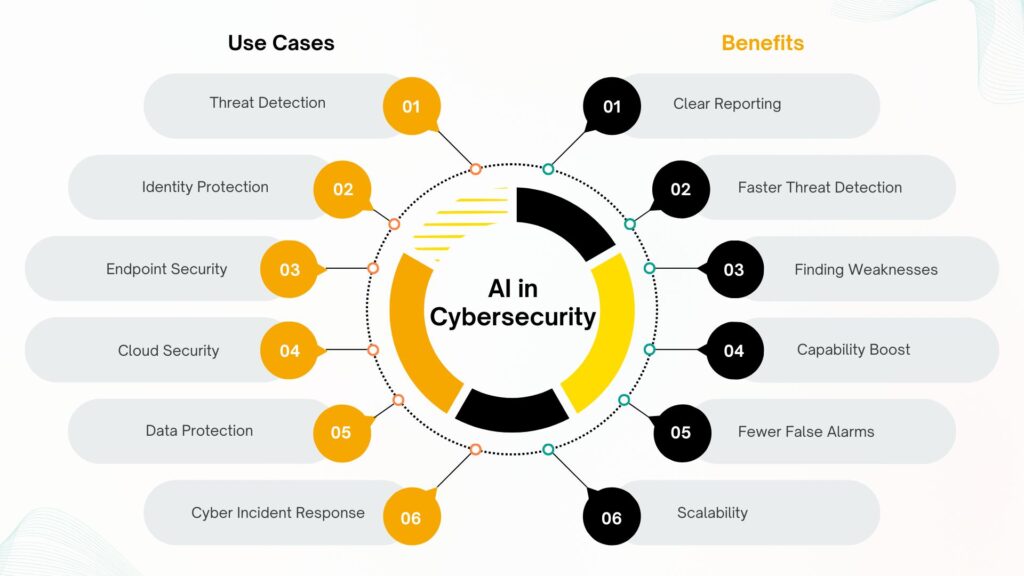
Threat Detection
AI continuously analyses behaviour across networks, devices, and applications. It identifies established patterns and looks for behaviour that doesn’t align with them. This behavioural approach from software like Microsoft Defender helps to uncover what may seem minor, but will escalate into serious issues.
Identity Protection
Identity is the new cyber battleground, with stolen credentials being a very common gateway into a business environment. With AI, multiple signals can be monitored at once to ensure a login isn’t suspicious. These include the location, device type, login time, historical patterns and MFA methods. Anything outside of the norm will block a login and require further identification. Microsoft’s ‘Conditional Access’ is a solid example of login protection.
Endpoint Security
Endpoints are physical devices connected to a network, such as tablets and laptops. They generate a large amount of activity – multiple processes come into play, with files opening and closing, memory getting accessed and connections being created. AI learns the patterns of the standard processes happening within an endpoint, and flags when something suspicious, like privilege escalation, occurs. Responses can be automated, which helps to proactively stop attacks.
Cloud Security
Cloud environments change constantly and often an organisation will use multiple cloud providers. It’s a moving landscape of users, permissions and applications – and AI helps maintain control of this. It’ll identify risky configurations and keep an eye on access rights.
Data Protection
Sensitive data doesn’t sit in one place – it lives in emails, shared drives, cloud storage and collaboration tools. AI can identify and label sensitive data wherever it’s housed, so it can be classified and its usage monitored. If data is moved in an unusual way, an alert will be raised – reducing data theft or accidental exposure.
Cyber Incident Response
Speed is of the essence when it comes to responding to a cyber incident. AI provides this, quickly identifying assets that are affected and identifying and shutting down potential attack paths. Security teams get a clear picture faster and can respond accordingly.
The Benefits of AI for Security Teams
The benefits AI has brought to cybersecurity and IT teams aren’t abstract – they are real and measurable. Here are some of them.
Faster Threat Detection
AI effectively separates security signals from the noise of the thousands of events happening within your business environment every day. Anything that raises a red flag is quickly identified, helping stall threats in their early stages.
Clear Reporting
Complex information is pulled from multiple systems and presented in an easy-to-understand format with actionable insights. There’s no scrutinising of long logs or technical dashboards – communications are clearer as a result and decision-making is improved.
Finding Weaknesses
AI helps uncover gaps in your environment that often go unnoticed. This includes unknown devices, shadow cloud applications, outdated operating systems, or sensitive data that is not properly protected. These weaknesses are often exploited later, so finding them early matters.
Capability Boost
Cybersecurity teams no longer need to master complex queries just to get answers. AI makes threat data much clearer and gives suggested response steps. Advanced tasks can easily be taken care of.
Fewer False Alarms
Once AI gets the context of your business environment, you’ll experience fewer unnecessary alerts. It’s continuously learning on the job, using pattern recognition and anomaly detection to isolate potential attacks or problems. Its advanced accuracy in doing this means you spend less time chasing false positives or negatives.
Scalability
AI will scale with your business environment, learning and adapting as your business grows. Your security remains in place and your team and systems won’t get overwhelmed.
 Talk to the Brisbane Cybersecurity Experts
 Talk to the Brisbane Cybersecurity Experts
Leveraging AI to protect your business doesn’t happen automatically, and the results you get depend on how it’s applied. Your business will get the best security outcomes when the intelligent technology is paired with the guidance of experienced and qualified personnel.
That’s where Smile IT steps in.
We focus on AI use that strengthens business cybersecurity without creating complexity – and we’re here to have a conversation about how to implement that within your organisation. Get in touch today and a friendly member of our team will answer any questions you might have.

When he’s not writing tech articles or turning IT startups into established and consistent managed service providers, Peter Drummond can be found kitesurfing on Moreton Bay or hanging out with his family!